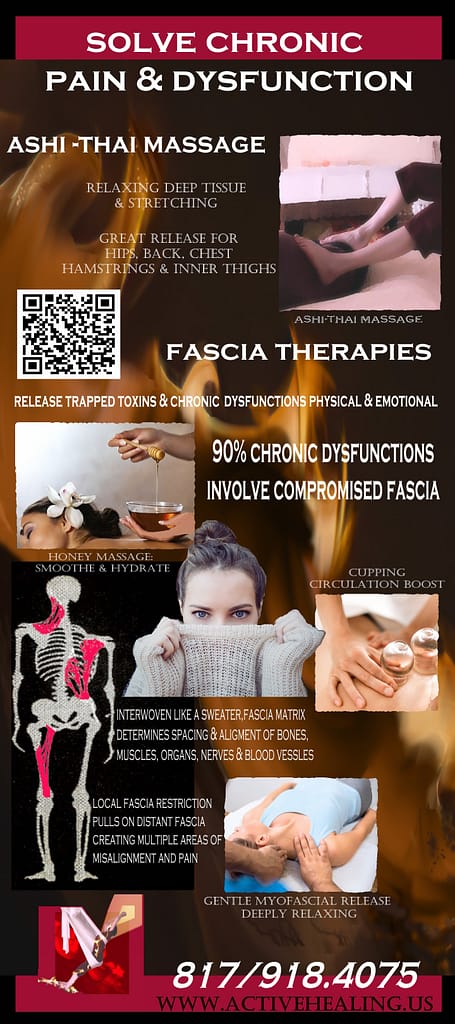
Neuromuscular Massage Cures Chronic Pain & Dysfunction
The Root Cause: Fascia Restrictions
Can’t take chronic pain anymore? Neuromuscular massage comes to the rescue when most other manual therapies are left scratching their head. That is because fascia is oftentimes overlooked, but 90% of physical dysfunction involves fascia restrictions. The following fascia therapies offered by Active Healing offer unique benefits while effectively treating fascia restrictions overall.
Myofascial Release Cranio-Sacral Therapy, pioneered by John Barnes, offer manual techniques designed to alleviate chronic pain, dysfunction, and emotional trauma stored in the body.
Indeed, cranio-sacral myofascial release benefits issues like persistent tension, unresolved pain from old injuries, recurring headaches, TMJ, neck pain, frozen shoulders, and more, resulting from compressed connective tissue called fascia.
Visceral Manipulation Massage (VM) is a focused fascia therapy of the abdominal region with numerous benefits. Definitely consider VM if you are looking for anything organ related that is non-invasive and natural.
For acute sports and other injuries and pain patterns a fascia massage FDM(Fascia Distortion Model),developed by DO Stephen Typaldos, provides the roadmap for fast relief very effectively. Many times no other kind of treatment is necessary, although specific exercises may sometimes be necessary to permanently reset proper spacing within connective tissues to decompress nerves and re-establish proper nerve gliding, muscle contraction and blood flow.
The sooner patient seeks manual therapy following an acute injury the better and faster the outcome. Neuromuscular massage can help resolve dysfunction before swelling sets in and therefore may effectively reduce inflammation. The longer a patient waits to get therapy, the more susceptible he or she becomes to secondary fixations. Tectonic fixation, a persistent kind of secondary fascia restrictions, occur because the patient will typically limit range of motion to avoid pain due to inflammation, resulting in sheets of fascia sticking together. Localized FDM treatment may need to continue twice a week for a duration of six weeks or longer to resolve these secondary fixations.
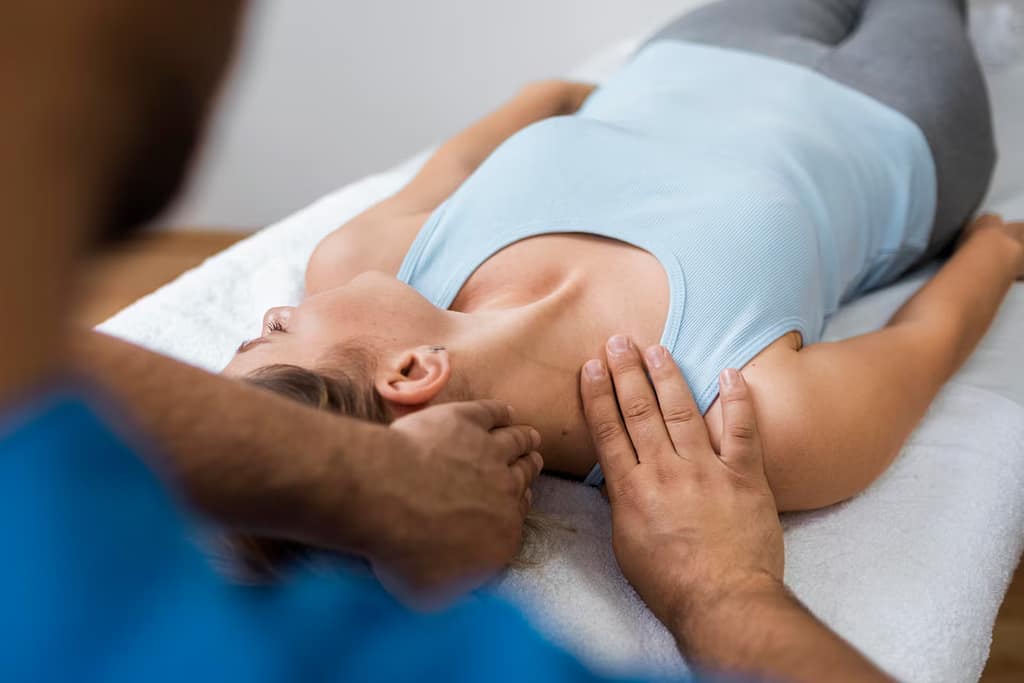
Many dysfunctions stem from fascia restrictions. Fascia is a three-dimensional elastic membrane system that surrounds muscles, organs, blood vessels, and nerves. Unfortunately, traditional medical diagnostics often overlook fascia because it’s difficult to observe. However, fascia plays a crucial role in the body. Without a doubt, it’s frequently the primary source of restrictions, with muscle and bone issues stemming from it. You might wonder does myofascial pain go away on its own? Well in fact you may able to resolve mild or recent fascia restrictions yourself if you have been doing regular mobility exercises. These exercises should incorporate slow range of motion movements and diagonal stretches. Thus keeping your fascia supple and lubricated you help it remain less susceptible to facia restrictions in the first place.
Clearly, addressing fascial restrictions is essential for achieving lasting relief in majority of cases. Without treating fascia, therapies like a non fascia massages such as Swedish and most kinds of deep tissue massages, osteopathy, and medication often fail to provide long-term results. All too often, chronic dysfunction persists unless fascia is targeted first, enabling sustained muscle health and skeletal alignment.
What Does Myofascial Pain Feel Like?
Myofascial pain typically manifests as a deep, aching sensation in affected muscles. It often feels like a constant, dull discomfort that persists or worsens over time. Moreover, patients may experience tender knots or “trigger points” in their muscles. These points can cause sharp, stabbing pain when pressed. Additionally, the pain may radiate to other areas, a phenomenon known as referred pain. Fascia restrictions can lead to a reduced range of motion in the affected area. Many people describe the sensation as burning, stinging, or aching. Indeed, myofascial pain may oftentimes be felt in and attributed to pinched nerves and muscle trigger points. However, it’s important to remember that fascia restrictions may be at the source of chronic dysfunction 90 % of the time. Ultimately, this chronic pain can significantly impact sleep quality and overall well-being.
What Does Chronic Pain Do to a Person?
Chronic pain has profound effects on a person’s physical, mental, and emotional well-being:
Physical Impact
- Disrupts sleep patterns, leading to fatigue and decreased overall health.
- Reduces mobility and physical capabilities, limiting daily activities.
- Alters brain structure, including reduced gray matter and increased sensitivity
Mental Health Effects
- Increases risk of depression, with 35-45% of chronic pain sufferers experiencing depression
- Heightens anxiety levels and risk of developing anxiety disorders
- Can lead to post-traumatic stress disorder (PTSD) in 15-35% of chronic pain patients
Cognitive Changes
- Impairs concentration and decision-making abilities
- Affects memory and attention span
- Alters neurotransmitter levels in the brain
Emotional and Personality Changes
- Increases irritability and mood fluctuations
- Reduces motivation and willingness to take risks
- May lead to pessimism, fear, and increased worry
Social and Lifestyle Impact
- Often results in withdrawal from activities and social interactions
- Can strain relationships and lead to feelings of isolation
- May cause financial stress due to medical costs and reduced work capacity
Chronic pain creates a complex cycle, where physical discomfort exacerbates mental health issues, which in turn can amplify pain perception, significantly diminishing overall quality of life. Realizing all that and that fascia focused neuromuscular massage may likely fix it, what’s the point of living with chronic pain?
Myofascial Release Cranio-Sacral Neuromuscular Massage vs Rolfing
While Myofascial Release fascia therapy and Rolfing share similarities, they differ in their approach. Most notably, a myofascial release therapist uses slow, gentle traction instead of deep pressure. Sessions typically last about an hour and involve holding specific areas for two to eight minutes. Myofascial technique allows heat and infrared energy from the therapist’s hands to melt adhesions, boost circulation, and promote healing.
The treatment progresses gradually, starting at the feet and moving up to the pelvis, thoracic area, arms, neck, and finally the cranium. Like Rolfing, the therapy is focused on the entire body as a whole and is often completed in ten sessions.
Unlike Rolfing and many massage styles, Myofascial Release Cranio-Sacral Therapy feel light and non-invasive. Perhaps surprisingly, fascia naturally responds to gentle traction rather than force. This intuitive approach allows the tissue to release and guide the therapist to areas that need deeper or broader work. Naturally, due to its subtle relaxing nature, it works well with other intuitive work such as Reiki massage.
Cupping and Honey Massage as Part of Neuromuscular Massage
Neuromuscular massage does not equal painful massage! It’s true, the more direct fascia mobilization techniques, such as FDM may be necessary in some areas with severe fascia restrictions. However, these areas can feel too tender, intense and uncomfortable for some people. Thankfully, tools like gua sha, honey, and cupping are highly effective for releasing these focal points with less discomfort. These methods target bound tissue, enhancing circulation and promoting healing in the affected areas.
Myofascial Release & Cranio-Sacral Therapy provide gentle yet transformative solutions for chronic pain and dysfunction. By addressing the fascia restrictions, these therapies unlock the body’s natural ability to heal and sustain health. These may be used alone or in conjunction with the more direct techniques described above.
Fascia mobilization with cupping and honey massage can be done all over the body. Depending on your body constitution and restriction types, fascia mobilization technique can feel quite painful and cupping oftentimes feels more gentle and yields the same results. Honey massage and honey cupping massage feel quite unique and offer fascia release on superficial and deeper levels. Due to honey’s unique consistency and biological constitution, such massages offer benefits all their own, including deep skin hydration, exfoliation and toning. Still other areas at or close to muscle origins and insertions that aren’t accessible with cupping or honey massage yield better to massage with feet!
What to Expect After Myofascial Release?
After myofascial release, you’ll likely experience a variety of sensations. Initially, many people feel immediate relief and increased mobility. Moreover, some discomfort is normal during the first 24-48 hours. In fact, your body will work to flush out released toxins from treated tissues. Consequently, muscle twitches or heat sensations might occur as blood flow improves. Furthermore, temporary fatigue or lightheadedness can happen after treatment. These reactions indicate your body is healing and responding positively. Staying hydrated helps support the recovery process. Over time, you’ll notice improved flexibility and reduced chronic pain. Ultimately, the treatment aims to restore your body’s natural movement patterns and comfort.
Learn More About Fascia Therapy and Neuromuscular Massage
Peer-Reviewed Studies:
- Research on the effectiveness of myofascial release can be found in the PubMed Database.
- Explore additional studies on fascia and chronic pain at the National Center for Biotechnology Information (NCBI).
Medical Institutions:
- Learn about chronic pain management strategies from the Mayo Clinic.
- The Cleveland Clinic also provides insights into conditions treated by Myofascial Release.
Fascia Research:
- The Fascia Research Society offers resources on the science of fascia.
- Additional information is available on John Barnes’ official site for Myofascial Release Therapy.
Therapist Associations:
- Explore therapeutic methods at the American Massage Therapy Association (AMTA).
- The International Association of Healthcare Practitioners (IAHP) highlights Cranio-Sacral Therapy and related practices.
Alternative Medicine:
- Discover complementary approaches to pain relief at the National Center for Complementary and Integrative Health (NCCIH).
Practical Health Advice:
- Find practical wellness tips on stretching and mobility at Healthline or WebMD.
- For insights into exercise and recovery, visit the National Academy of Sports Medicine (NASM).
